AWS Outlines Four HITL Patterns for Healthcare AI Agents
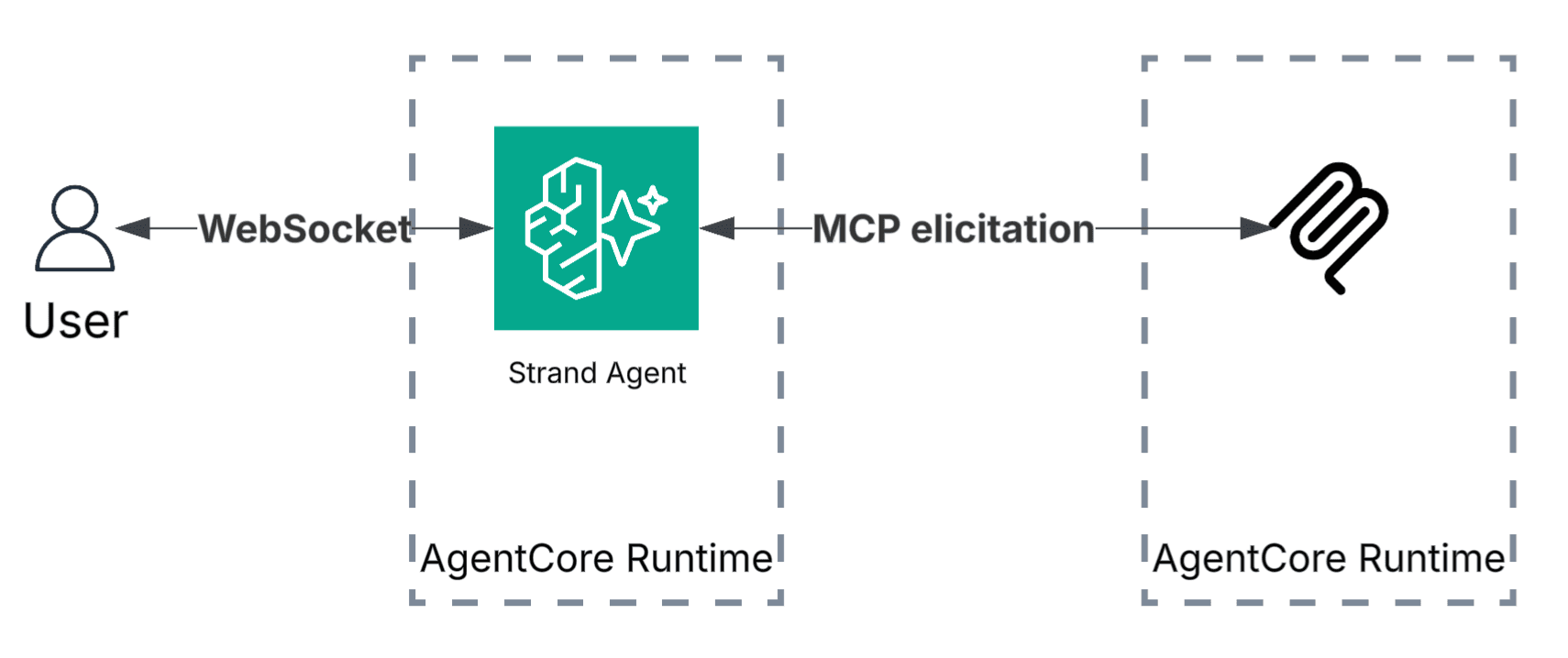
AWS published a technical guide on implementing human-in-the-loop (HITL) constructs for AI agents in healthcare and life sciences workflows. The post outlines four practical approaches using AWS services, the Strands Agents framework, and Amazon Bedrock AgentCore Runtime to enforce human oversight at critical decision points while maintaining automation efficiency. HITL is essential in healthcare due to regulatory compliance requirements like GxP standards, patient safety concerns, audit trails, and Protected Health Information (PHI) sensitivity.
AWS published a technical guide on implementing human-in-the-loop (HITL) constructs for AI agents in healthcare and life sciences workflows. The post outlines four practical approaches using AWS services, the Strands Agents framework, and Amazon Bedrock AgentCore Runtime to enforce human oversight at critical decision points while maintaining automation efficiency. HITL is essential in healthcare due to regulatory compliance requirements like GxP standards, patient safety concerns, audit trails, and Protected Health Information (PHI) sensitivity.
- Four HITL implementation patterns: agentic loop interrupt via framework hooks, tool context interrupt for fine-grained control, remote tool interrupt using AWS Step Functions and SNS for asynchronous approval, and MCP elicitation for real-time interactive approval
- Architecture leverages Strands Agents Framework for lifecycle management, Amazon Bedrock AgentCore Runtime for serverless deployment, and AWS Step Functions for orchestrating asynchronous workflows
- Healthcare and life sciences face unique deployment challenges including GxP regulatory compliance, patient safety validation, audit trail requirements, and PHI access controls that demand human oversight before sensitive operations execute
- Each pattern suits different risk profiles and scenarios, allowing organizations to choose appropriate control mechanisms based on operation sensitivity and approval workflow complexity
Healthcare AI deployment has historically struggled with the tension between automation efficiency and regulatory compliance. This guide addresses a critical gap by providing concrete, production-ready patterns for embedding human oversight into agentic workflows without sacrificing the speed benefits that make AI agents valuable. As healthcare organizations increasingly adopt AI agents for clinical data processing, regulatory submissions, and drug development, standardized HITL approaches become essential infrastructure.
- HITL is not optional in regulated healthcare environments, making it a baseline requirement rather than an enhancement for any agentic healthcare deployment
- Multiple implementation patterns exist with different tradeoffs between real-time control, asynchronous flexibility, and operational complexity, requiring careful selection based on use case risk profile
- AWS is positioning itself as the infrastructure layer for compliant healthcare AI by providing both the agent runtime and the orchestration tools needed for HITL workflows
- Organizations can now build healthcare agents with documented approval chains and audit trails, directly addressing GxP compliance requirements that previously made agent deployment risky
Our Briefing
Weekly signal. No noise. Built for founders, operators, and AI-curious professionals.
No spam. Unsubscribe any time.