Amazon Bedrock Powers Text-to-SQL for Enterprise Data Access
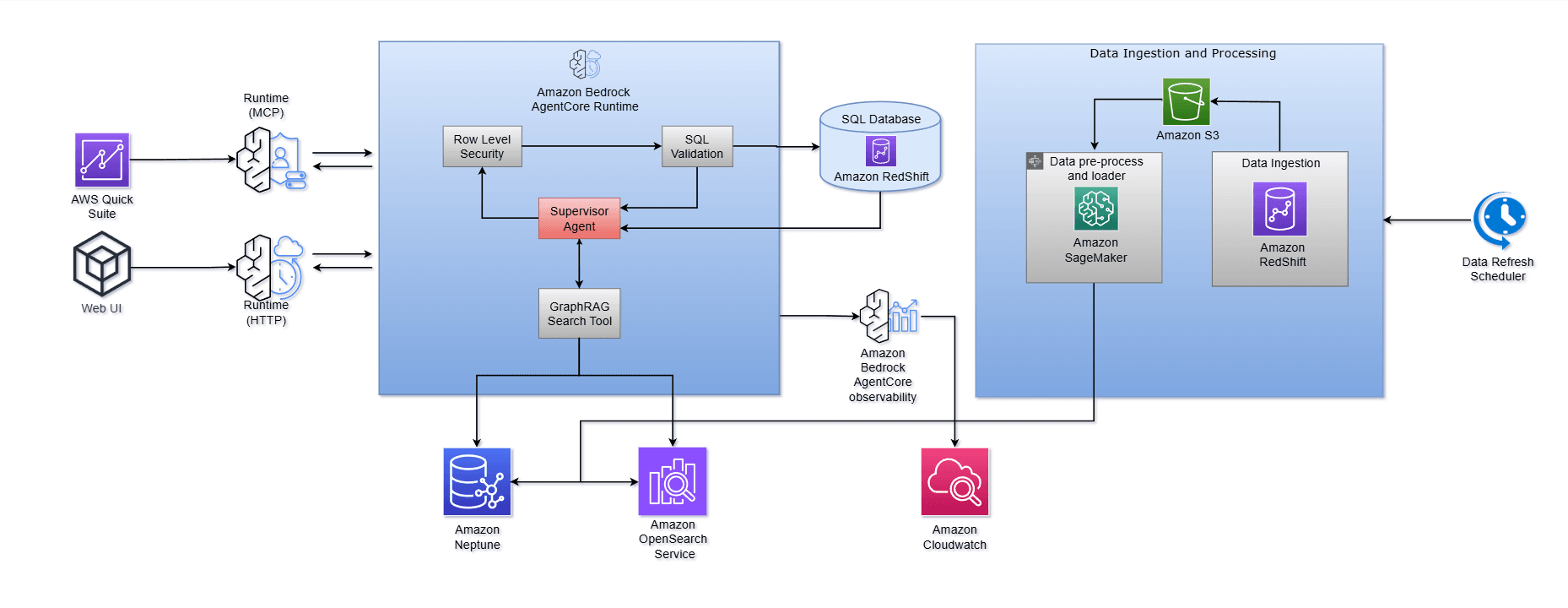
AWS published a guide on building text-to-SQL solutions using Amazon Bedrock that converts natural language business questions directly into database queries and returns synthesized results. The approach targets organizations where traditional BI tools fall short, particularly when users need to query complex multi-table schemas with domain-specific logic and one-time analytical questions. The solution aims to reduce bottlenecks by enabling business users to self-serve routine queries, freeing technical teams for higher-value work.
AWS published a guide on building text-to-SQL solutions using Amazon Bedrock that converts natural language business questions directly into database queries and returns synthesized results. The approach targets organizations where traditional BI tools fall short, particularly when users need to query complex multi-table schemas with domain-specific logic and one-time analytical questions. The solution aims to reduce bottlenecks by enabling business users to self-serve routine queries, freeing technical teams for higher-value work.
- Amazon Bedrock can power text-to-SQL systems that translate business questions into executable database queries without requiring SQL expertise from end users
- Custom text-to-SQL solutions address gaps where traditional BI tools and dashboards cannot handle complex multi-table joins, ad-hoc queries, and domain-specific business logic
- The approach reduces analyst workload on repetitive query requests and accelerates time from question to answer, potentially from hours to seconds
- Implementation requires careful handling of schema complexity, business context retrieval, and semantic translation between business terminology and database structure
Text-to-SQL powered by large language models represents a practical application of generative AI to enterprise data access, reducing friction in analytics workflows. As organizations accumulate complex data warehouses with specialized business logic, LLM-based query generation becomes a viable alternative to pre-built semantic layers and curated dashboards, expanding where natural language interfaces can operate effectively.
- LLMs are moving beyond chat interfaces into direct integration with enterprise data systems, creating new categories of internal tools that reduce dependency on specialized technical skills
- Organizations with complex, multi-table schemas and domain-specific business logic now have a viable path to democratize data access without rebuilding their entire BI stack
- Success depends heavily on context management and semantic understanding, meaning implementation complexity remains significant despite the simplicity of the end-user interface
Our Briefing
Weekly signal. No noise. Built for founders, operators, and AI-curious professionals.
No spam. Unsubscribe any time.