CodeTracer: Making Code Agent Failures Visible and Fixable
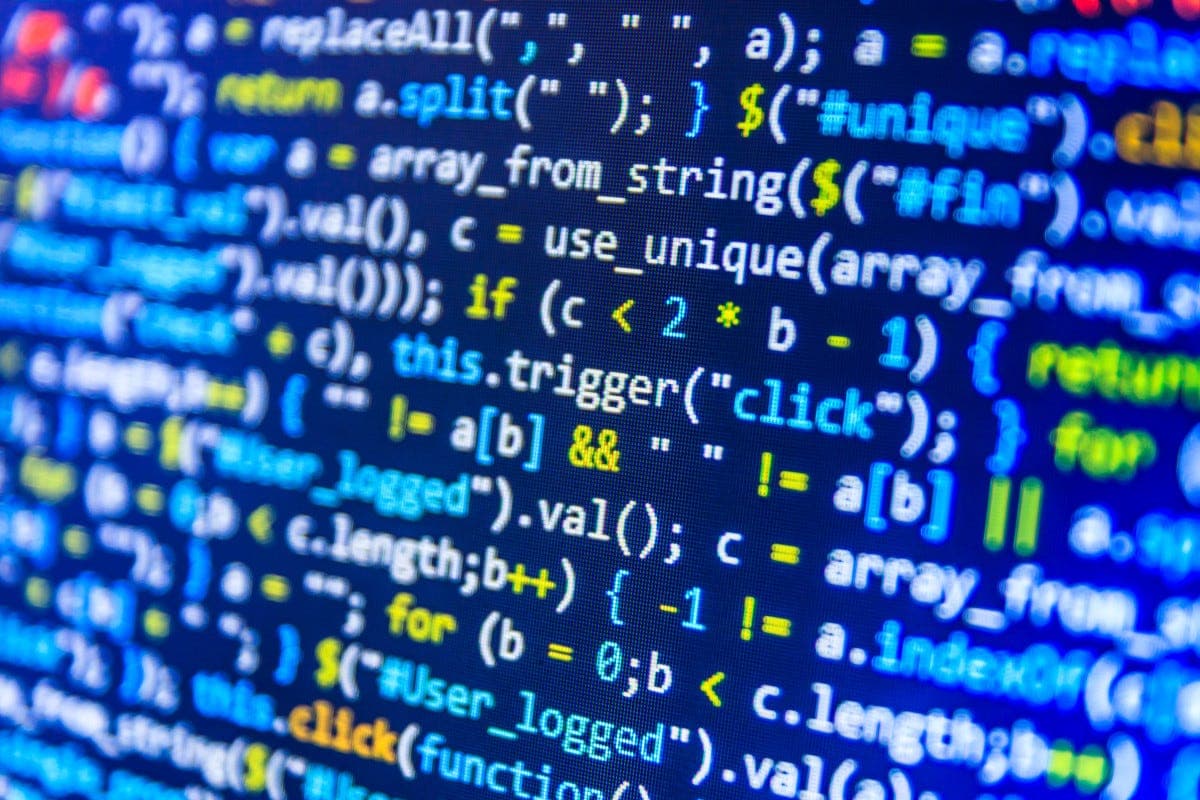
Researchers have introduced CodeTracer, a tracing architecture designed to debug code-generating AI agents by reconstructing their full state transition history and pinpointing where failures originate. The system parses execution artifacts from multiple agent frameworks, builds hierarchical trace trees with persistent memory, and performs failure onset localization to identify error chains. The team also released CodeTraceBench, a benchmark dataset with stage and step-level supervision from four major code agent frameworks tested on diverse tasks like bug fixing and refactoring. Experiments show CodeTracer substantially outperforms simpler baselines and can recover originally failed runs when diagnostic signals are replayed.
Researchers have introduced CodeTracer, a tracing architecture designed to debug code-generating AI agents by reconstructing their full state transition history and pinpointing where failures originate. The system parses execution artifacts from multiple agent frameworks, builds hierarchical trace trees with persistent memory, and performs failure onset localization to identify error chains. The team also released CodeTraceBench, a benchmark dataset with stage and step-level supervision from four major code agent frameworks tested on diverse tasks like bug fixing and refactoring. Experiments show CodeTracer substantially outperforms simpler baselines and can recover originally failed runs when diagnostic signals are replayed.
- CodeTracer reconstructs full state transition histories for code agents as hierarchical trace trees, making it easier to observe where and why agents fail
- The system performs failure onset localization to pinpoint the origin of errors and trace downstream cascading failures in agent workflows
- CodeTraceBench provides a large-scale evaluation dataset with supervision at both stage and step levels across four code agent frameworks and diverse coding tasks
- Replaying CodeTracer's diagnostic signals can recover originally failed runs under matched computational budgets, demonstrating practical debugging utility
Code agents are becoming more complex with parallel tool calls and multi-stage workflows, making debugging increasingly opaque and difficult. Existing tracing approaches don't scale to real-world coding tasks, leaving developers unable to understand why agents fail or how to fix them. CodeTracer addresses this critical gap by providing systematic, scalable visibility into agent execution, which is essential as code generation becomes a core capability in AI systems.
- Observability and debuggability are becoming critical differentiators for agent frameworks, and tools like CodeTracer may become table stakes for production deployments
- The hierarchical trace tree approach with persistent memory suggests a broader pattern for making complex multi-stage AI workflows more interpretable and controllable
- Failure onset localization could enable automated remediation strategies, where systems not only identify problems but suggest or apply fixes without human intervention
Our Briefing
Weekly signal. No noise. Built for founders, operators, and AI-curious professionals.
No spam. Unsubscribe any time.