AWS cuts webpage publishing time 95% with agentic AI
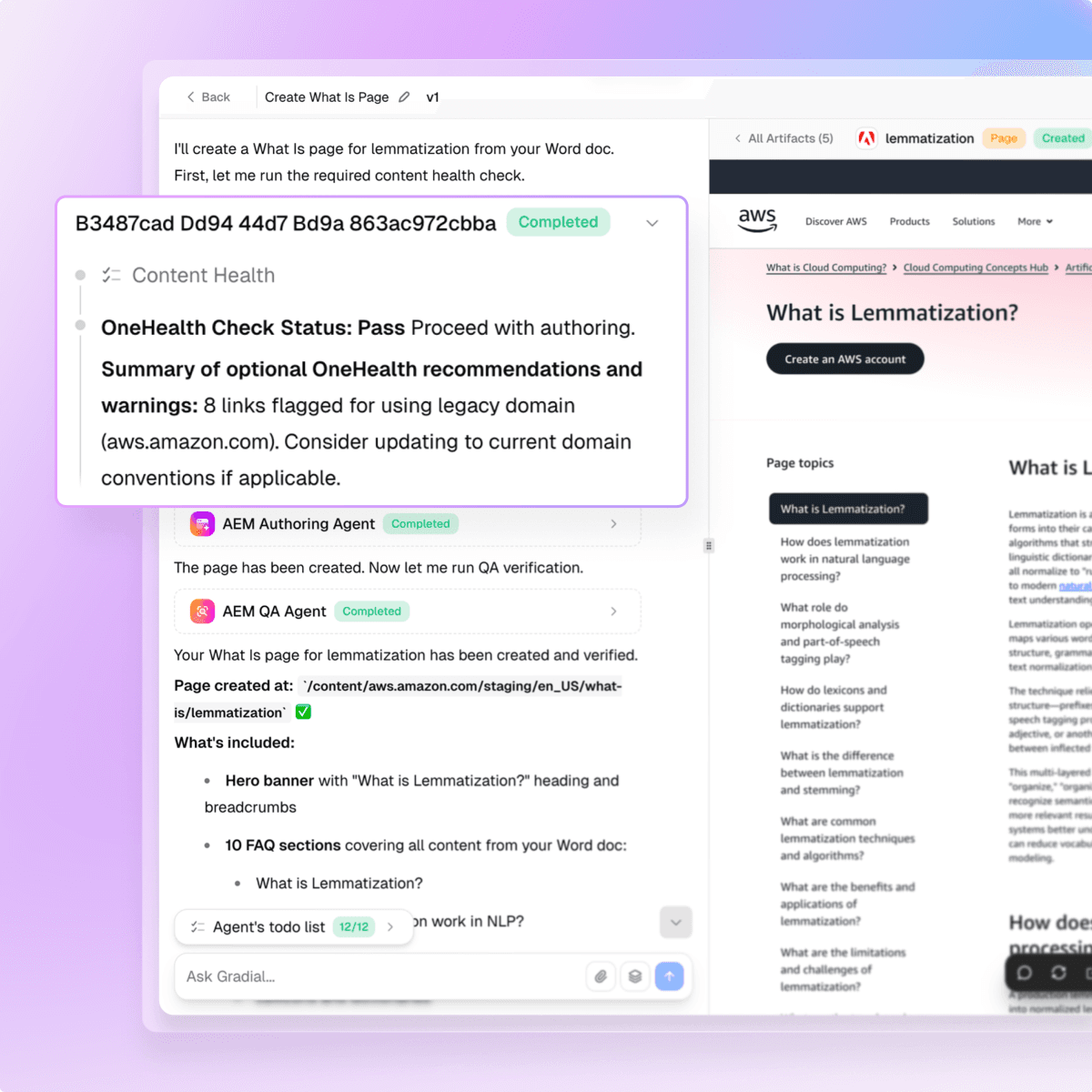
AWS and Gradial built an agentic AI solution on Amazon Bedrock that reduces webpage assembly time from four hours to ten minutes, a 95% reduction. The system automates content publishing workflows by orchestrating page assembly, interpreting natural language requests, and enforcing brand and accessibility standards before publication. Marketing teams can now redirect hours previously spent on manual coordination and review cycles toward strategic work like customer research and campaign optimization.
AWS and Gradial built an agentic AI solution on Amazon Bedrock that reduces webpage assembly time from four hours to ten minutes, a 95% reduction. The system automates content publishing workflows by orchestrating page assembly, interpreting natural language requests, and enforcing brand and accessibility standards before publication. Marketing teams can now redirect hours previously spent on manual coordination and review cycles toward strategic work like customer research and campaign optimization.
- Agentic AI solution cuts webpage publishing time from four hours to ten minutes by automating manual assembly and coordination work
- Built on Amazon Bedrock using Anthropic Claude and Amazon Nova foundation models, integrated with enterprise CMS systems
- System handles complex orchestration including component determination, natural language interpretation, and built-in validation for compliance and accessibility
- Maintains quality standards while freeing marketing teams from repetitive coordination tasks to focus on strategy and customer insights
This demonstrates a concrete, measurable application of agentic AI to enterprise workflows where the value isn't just speed but also consistency and quality enforcement. The solution shows how foundation models can coordinate multi-step processes with stakeholder requirements, suggesting a broader pattern for how AI agents can handle complex organizational workflows beyond simple task automation.
- Agentic AI can handle complex, multi-stakeholder workflows that require coordination across systems, suggesting broader applicability to other enterprise processes like approval chains and cross-functional project management
- Integration with existing enterprise systems (CMS, validation frameworks) is critical for adoption, indicating that AI agent value depends on seamless connection to legacy infrastructure rather than replacement
- Maintaining quality and compliance while automating coordination suggests that AI agents can enforce organizational standards at scale, reducing the need for manual review cycles without sacrificing governance
Our Briefing
Weekly signal. No noise. Built for founders, operators, and AI-curious professionals.
No spam. Unsubscribe any time.