vff
News

Phononic Eyes $1.5B+ Valuation in AI Data Center Cooling Play

Anissa GardizyRead original
Share
Phononic Eyes $1.5B+ Valuation in AI Data Center Cooling Play

Phononic, a 17-year-old Durham, North Carolina semiconductor company that makes cooling components for AI data center servers, is in talks with potential buyers at a valuation of at least $1.5 billion, with some buyers expressing interest above $2 billion. The company has engaged investment bank Lazard to evaluate its options since early 2026. This valuation would more than double its last private funding round, reflecting broader investor appetite for industrial suppliers tied to AI infrastructure demand. Phononic may also choose to raise additional capital instead of pursuing a sale.

Phononic, a 17-year-old Durham, North Carolina semiconductor company that makes cooling components for AI data center servers, is in talks with potential buyers at a valuation of at least $1.5 billion, with some buyers expressing interest above $2 billion. The company has engaged investment bank Lazard to evaluate its options since early 2026. This valuation would more than double its last private funding round, reflecting broader investor appetite for industrial suppliers tied to AI infrastructure demand. Phononic may also choose to raise additional capital instead of pursuing a sale.

  • Phononic, a semiconductor cooling component maker for AI data centers, is discussing a sale at $1.5B+ valuation, with some buyers interested above $2B
  • The potential deal would more than double the company's valuation from its last private financing round
  • Phononic has engaged Lazard to evaluate options since early 2026 and retains the option to raise capital instead of selling
  • The interest reflects strong demand for industrial suppliers supporting AI infrastructure, particularly cooling and thermal management solutions

AI data center buildout is driving valuations across the supply chain, not just for chip makers and cloud providers. Cooling and thermal management are critical bottlenecks in scaling AI infrastructure, making suppliers like Phononic strategically valuable. This deal signals that investors see infrastructure enablers as core to the AI boom's continuation.

  • Cooling and thermal management are becoming recognized as critical infrastructure assets in the AI economy, not commodity components
  • Industrial and semiconductor suppliers with AI-specific solutions are attracting acquisition interest at substantial valuations, broadening the M&A landscape beyond pure software and model companies
  • Strong buyer interest above $2B suggests multiple strategic acquirers see value in owning cooling technology as AI data center competition intensifies
Share

Our Briefing

Weekly signal. No noise. Built for founders, operators, and AI-curious professionals.

No spam. Unsubscribe any time.

Related stories

AI Discovers Security Flaws Faster Than Humans Can Patch Them

AI Discovers Security Flaws Faster Than Humans Can Patch Them

Recent high-profile breaches at startups like Mercor and Vercel, combined with Anthropic's disclosure that its Mythos AI model identified thousands of previously unknown cybersecurity vulnerabilities, underscore growing demand for AI-powered security solutions. The article argues that cybersecurity vendors CrowdStrike and Palo Alto Networks, which are integrating AI into their threat detection and response capabilities, represent undervalued investment opportunities as enterprises face mounting pressure to defend against both conventional and AI-discovered attack vectors.

21 days ago· The Information
AWS Launches G7e GPU Instances for Cheaper Large Model Inference
TrendingModel Release

AWS Launches G7e GPU Instances for Cheaper Large Model Inference

AWS has launched G7e instances on Amazon SageMaker AI, powered by NVIDIA RTX PRO 6000 Blackwell GPUs with 96 GB of GDDR7 memory per GPU. The instances deliver up to 2.3x inference performance compared to previous-generation G6e instances and support configurations from 1 to 8 GPUs, enabling deployment of large language models up to 300B parameters on the largest 8-GPU node. This represents a significant upgrade in memory bandwidth, networking throughput, and model capacity for generative AI inference workloads.

29 days ago· AWS Machine Learning Blog
Anthropic Launches Claude Design for Non-Designers
Model Release

Anthropic Launches Claude Design for Non-Designers

Anthropic has launched Claude Design, a new product aimed at helping non-designers like founders and product managers create visuals quickly to communicate their ideas. The tool addresses a gap for early-stage teams and individuals who need to share concepts visually but lack design expertise or resources. Claude Design integrates with Anthropic's Claude AI platform, leveraging its capabilities to streamline the visual creation process. The launch reflects growing demand for AI-powered design tools that lower barriers to entry for non-technical users.

about 1 month ago· TechCrunch AI
Google Splits TPUs Into Training and Inference Chips

Google Splits TPUs Into Training and Inference Chips

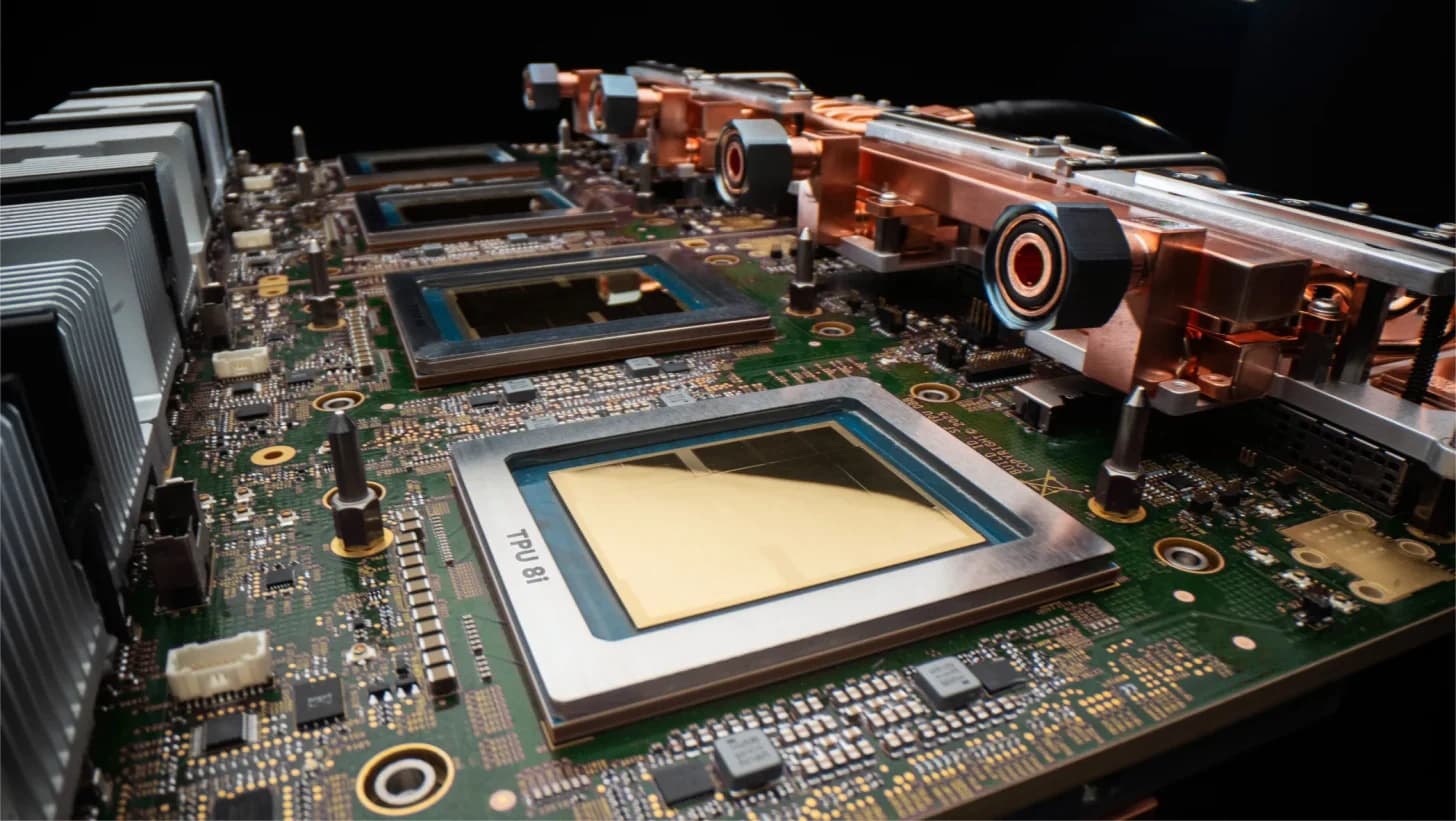
Google is splitting its eighth-generation tensor processing units into separate chips optimized for AI training and inference, a shift the company says reflects the rise of AI agents and their distinct computational needs. The training chip delivers 2.8 times the performance of its predecessor at the same price, while the inference processor (TPU 8i) achieves 80% better performance and includes triple the SRAM of the prior generation. Both chips will launch later this year as Google continues its effort to compete with Nvidia in custom AI silicon, though the company is not directly benchmarking against Nvidia's offerings.

28 days ago· Direct