vff
NewsTrending

Definity Embeds Agents Inside Spark to Prevent Pipeline Failures

Read original
Share
Definity Embeds Agents Inside Spark to Prevent Pipeline Failures

Definity, a Chicago-based data pipeline operations startup, has raised $12 million in Series A funding to embed autonomous agents directly inside Spark and DBT pipelines. Rather than monitoring failures after they occur, Definity's JVM agent runs inline during pipeline execution, detecting and preventing data quality issues, resource bottlenecks, and stale data in real time. Early customers report identifying 33% of optimization opportunities in the first week and resolving complex Spark issues up to 10x faster, addressing a critical gap for agentic AI systems that depend on clean, timely data.

Definity, a Chicago-based data pipeline operations startup, has raised $12 million in Series A funding to embed autonomous agents directly inside Spark and DBT pipelines. Rather than monitoring failures after they occur, Definity's JVM agent runs inline during pipeline execution, detecting and preventing data quality issues, resource bottlenecks, and stale data in real time. Early customers report identifying 33% of optimization opportunities in the first week and resolving complex Spark issues up to 10x faster, addressing a critical gap for agentic AI systems that depend on clean, timely data.

  • Definity embeds agents inside Spark pipeline execution layers via JVM instrumentation, catching failures during runs rather than after completion
  • The agent captures query execution behavior, memory pressure, data skew, and infrastructure utilization in real time, with ability to modify resource allocation or stop jobs mid-run
  • Series A round of $12 million led by GreatPoint Ventures, with participation from Dynatrace, StageOne Ventures, and Hyde Park Venture Partners
  • Early customer cut troubleshooting effort by 70% and identified 33% of optimization opportunities in first week of deployment

Agentic AI systems are only as reliable as their data pipelines. Silent failures or stale data don't just break dashboards, they break AI systems that depend on clean, timely inputs. Definity's in-execution approach addresses a fundamental architectural gap: existing monitoring tools detect problems after pipelines have already run and propagated bad data downstream, whereas inline agents can prevent failures before they reach dependent systems.

  • The shift from post-execution monitoring to in-execution intervention represents a new architectural pattern for data reliability, with potential to reshape how teams approach pipeline observability
  • Existing monitoring vendors like Datadog, Databricks, and Unravel Data may face pressure to move detection and intervention earlier in the execution lifecycle
  • As agentic AI adoption accelerates, data pipeline reliability becomes a critical dependency, creating market opportunity for solutions that prevent rather than just detect failures
Share

Our Briefing

Weekly signal. No noise. Built for founders, operators, and AI-curious professionals.

No spam. Unsubscribe any time.

Related stories

AI Discovers Security Flaws Faster Than Humans Can Patch Them

AI Discovers Security Flaws Faster Than Humans Can Patch Them

Recent high-profile breaches at startups like Mercor and Vercel, combined with Anthropic's disclosure that its Mythos AI model identified thousands of previously unknown cybersecurity vulnerabilities, underscore growing demand for AI-powered security solutions. The article argues that cybersecurity vendors CrowdStrike and Palo Alto Networks, which are integrating AI into their threat detection and response capabilities, represent undervalued investment opportunities as enterprises face mounting pressure to defend against both conventional and AI-discovered attack vectors.

21 days ago· The Information
AWS Launches G7e GPU Instances for Cheaper Large Model Inference
TrendingModel Release

AWS Launches G7e GPU Instances for Cheaper Large Model Inference

AWS has launched G7e instances on Amazon SageMaker AI, powered by NVIDIA RTX PRO 6000 Blackwell GPUs with 96 GB of GDDR7 memory per GPU. The instances deliver up to 2.3x inference performance compared to previous-generation G6e instances and support configurations from 1 to 8 GPUs, enabling deployment of large language models up to 300B parameters on the largest 8-GPU node. This represents a significant upgrade in memory bandwidth, networking throughput, and model capacity for generative AI inference workloads.

29 days ago· AWS Machine Learning Blog
Anthropic Launches Claude Design for Non-Designers
Model Release

Anthropic Launches Claude Design for Non-Designers

Anthropic has launched Claude Design, a new product aimed at helping non-designers like founders and product managers create visuals quickly to communicate their ideas. The tool addresses a gap for early-stage teams and individuals who need to share concepts visually but lack design expertise or resources. Claude Design integrates with Anthropic's Claude AI platform, leveraging its capabilities to streamline the visual creation process. The launch reflects growing demand for AI-powered design tools that lower barriers to entry for non-technical users.

about 1 month ago· TechCrunch AI
Google Splits TPUs Into Training and Inference Chips

Google Splits TPUs Into Training and Inference Chips

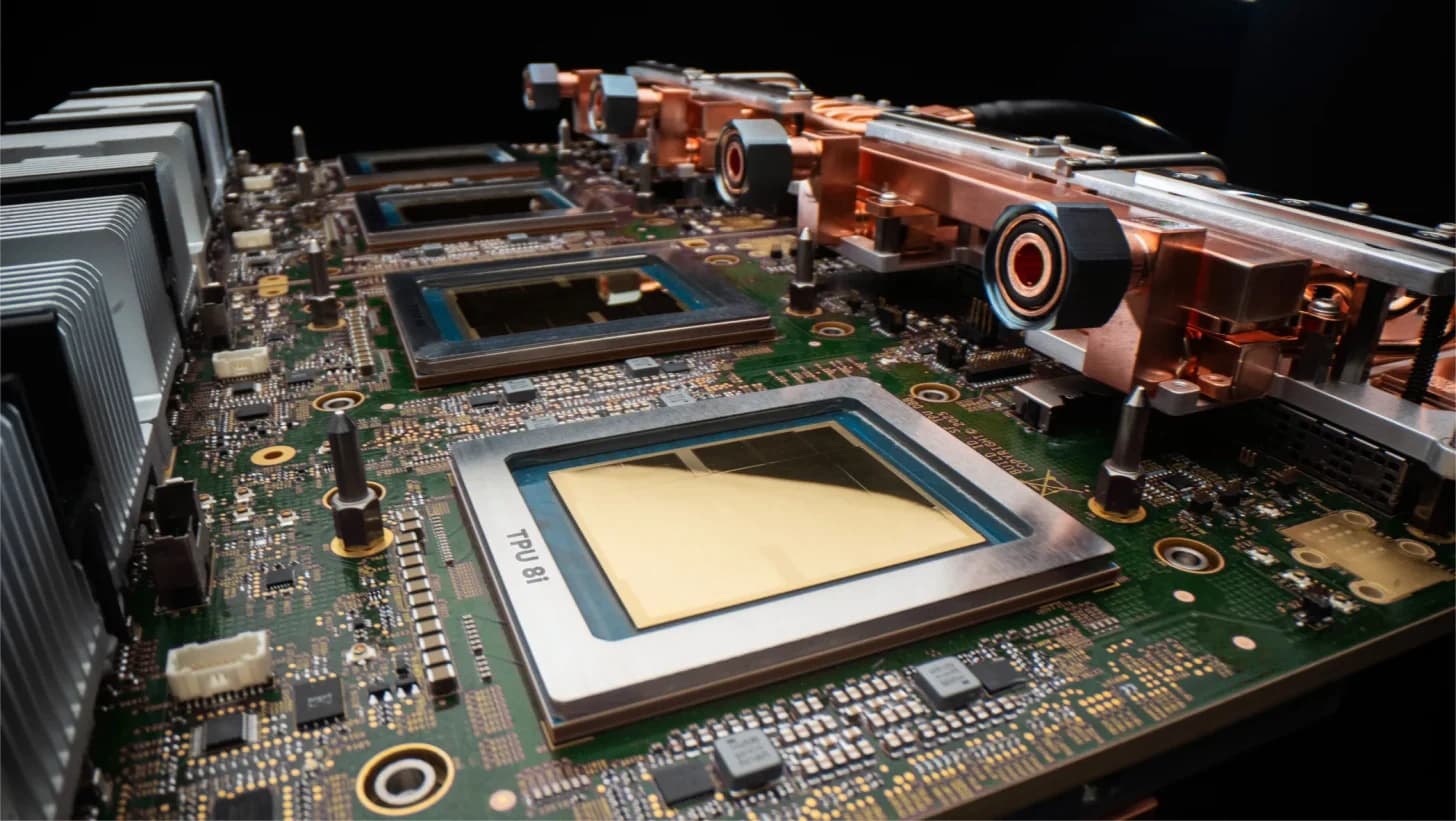
Google is splitting its eighth-generation tensor processing units into separate chips optimized for AI training and inference, a shift the company says reflects the rise of AI agents and their distinct computational needs. The training chip delivers 2.8 times the performance of its predecessor at the same price, while the inference processor (TPU 8i) achieves 80% better performance and includes triple the SRAM of the prior generation. Both chips will launch later this year as Google continues its effort to compete with Nvidia in custom AI silicon, though the company is not directly benchmarking against Nvidia's offerings.

28 days ago· Direct