vff
NewsTrending

Microsoft Cloud Revenue Accelerates on 33% Copilot Sales Growth

Aaron HolmesRead original
Share
Microsoft Cloud Revenue Accelerates on 33% Copilot Sales Growth

Microsoft reported first-quarter revenue growth of 18% to $82.9 billion, up 1 percentage point from the prior quarter, driven by accelerating growth in Azure cloud and Office 365 commercial businesses. Office 365 Copilot sales rose 33%, indicating strong enterprise adoption of the company's AI-integrated productivity tools. The acceleration signals sustained demand for both cloud infrastructure and AI-enhanced software, though the article provides limited detail on the drivers beyond general demand attribution.

Microsoft reported first-quarter revenue growth of 18% to $82.9 billion, up 1 percentage point from the prior quarter, driven by accelerating growth in Azure cloud and Office 365 commercial businesses. Office 365 Copilot sales rose 33%, indicating strong enterprise adoption of the company's AI-integrated productivity tools. The acceleration signals sustained demand for both cloud infrastructure and AI-enhanced software, though the article provides limited detail on the drivers beyond general demand attribution.

  • Microsoft Q1 revenue grew 18% year-over-year to $82.9 billion, with growth accelerating 1 percentage point sequentially
  • Azure cloud and Office 365 commercial businesses both showed accelerating growth in the quarter
  • Office 365 Copilot sales increased 33%, reflecting enterprise adoption of AI-powered productivity features
  • Growth attributed to rising demand, though specific customer segments and use cases not detailed in available excerpt

Microsoft's Copilot sales growth of 33% demonstrates that enterprises are actively adopting and paying for AI-integrated productivity tools, validating the commercial viability of generative AI in mainstream business software. The acceleration in both cloud and commercial office products suggests AI is becoming a material revenue driver for the world's largest software company, which has significant implications for how the industry values and prioritizes AI capabilities.

  • Enterprise customers are adopting AI-powered productivity tools at scale, validating the commercial case for generative AI in business applications
  • Microsoft's ability to integrate Copilot across its installed base of Office 365 users creates a significant competitive moat and revenue acceleration opportunity
  • Cloud infrastructure growth acceleration suggests sustained demand for AI workloads and compute capacity, benefiting hyperscalers broadly
Share

Our Briefing

Weekly signal. No noise. Built for founders, operators, and AI-curious professionals.

No spam. Unsubscribe any time.

Related stories

AI Discovers Security Flaws Faster Than Humans Can Patch Them

AI Discovers Security Flaws Faster Than Humans Can Patch Them

Recent high-profile breaches at startups like Mercor and Vercel, combined with Anthropic's disclosure that its Mythos AI model identified thousands of previously unknown cybersecurity vulnerabilities, underscore growing demand for AI-powered security solutions. The article argues that cybersecurity vendors CrowdStrike and Palo Alto Networks, which are integrating AI into their threat detection and response capabilities, represent undervalued investment opportunities as enterprises face mounting pressure to defend against both conventional and AI-discovered attack vectors.

21 days ago· The Information
AWS Launches G7e GPU Instances for Cheaper Large Model Inference
TrendingModel Release

AWS Launches G7e GPU Instances for Cheaper Large Model Inference

AWS has launched G7e instances on Amazon SageMaker AI, powered by NVIDIA RTX PRO 6000 Blackwell GPUs with 96 GB of GDDR7 memory per GPU. The instances deliver up to 2.3x inference performance compared to previous-generation G6e instances and support configurations from 1 to 8 GPUs, enabling deployment of large language models up to 300B parameters on the largest 8-GPU node. This represents a significant upgrade in memory bandwidth, networking throughput, and model capacity for generative AI inference workloads.

29 days ago· AWS Machine Learning Blog
Anthropic Launches Claude Design for Non-Designers
Model Release

Anthropic Launches Claude Design for Non-Designers

Anthropic has launched Claude Design, a new product aimed at helping non-designers like founders and product managers create visuals quickly to communicate their ideas. The tool addresses a gap for early-stage teams and individuals who need to share concepts visually but lack design expertise or resources. Claude Design integrates with Anthropic's Claude AI platform, leveraging its capabilities to streamline the visual creation process. The launch reflects growing demand for AI-powered design tools that lower barriers to entry for non-technical users.

about 1 month ago· TechCrunch AI
Google Splits TPUs Into Training and Inference Chips

Google Splits TPUs Into Training and Inference Chips

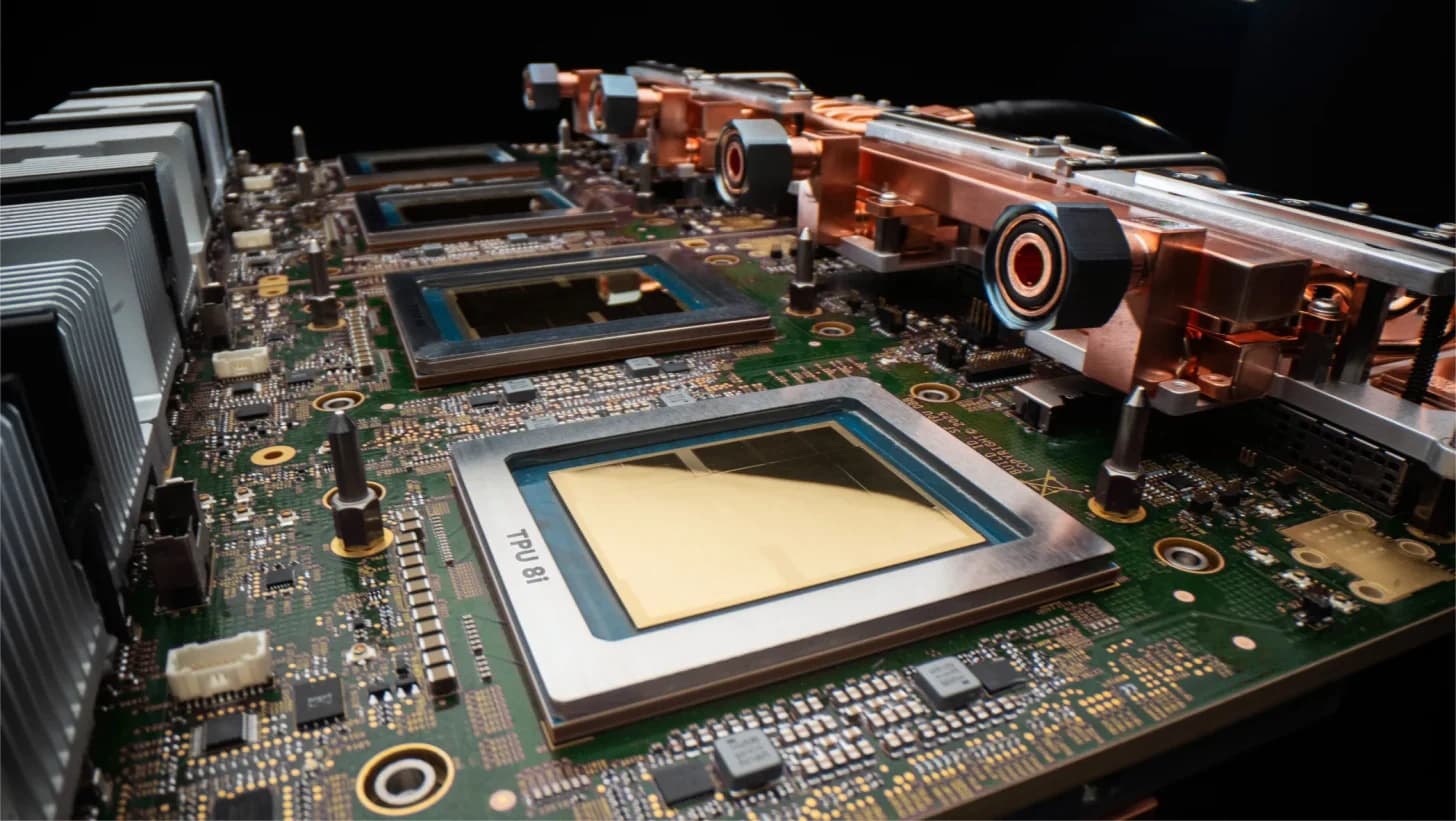
Google is splitting its eighth-generation tensor processing units into separate chips optimized for AI training and inference, a shift the company says reflects the rise of AI agents and their distinct computational needs. The training chip delivers 2.8 times the performance of its predecessor at the same price, while the inference processor (TPU 8i) achieves 80% better performance and includes triple the SRAM of the prior generation. Both chips will launch later this year as Google continues its effort to compete with Nvidia in custom AI silicon, though the company is not directly benchmarking against Nvidia's offerings.

28 days ago· Direct