AWS Quick Now Integrates Atlassian Confluence for Unified Documentation Search
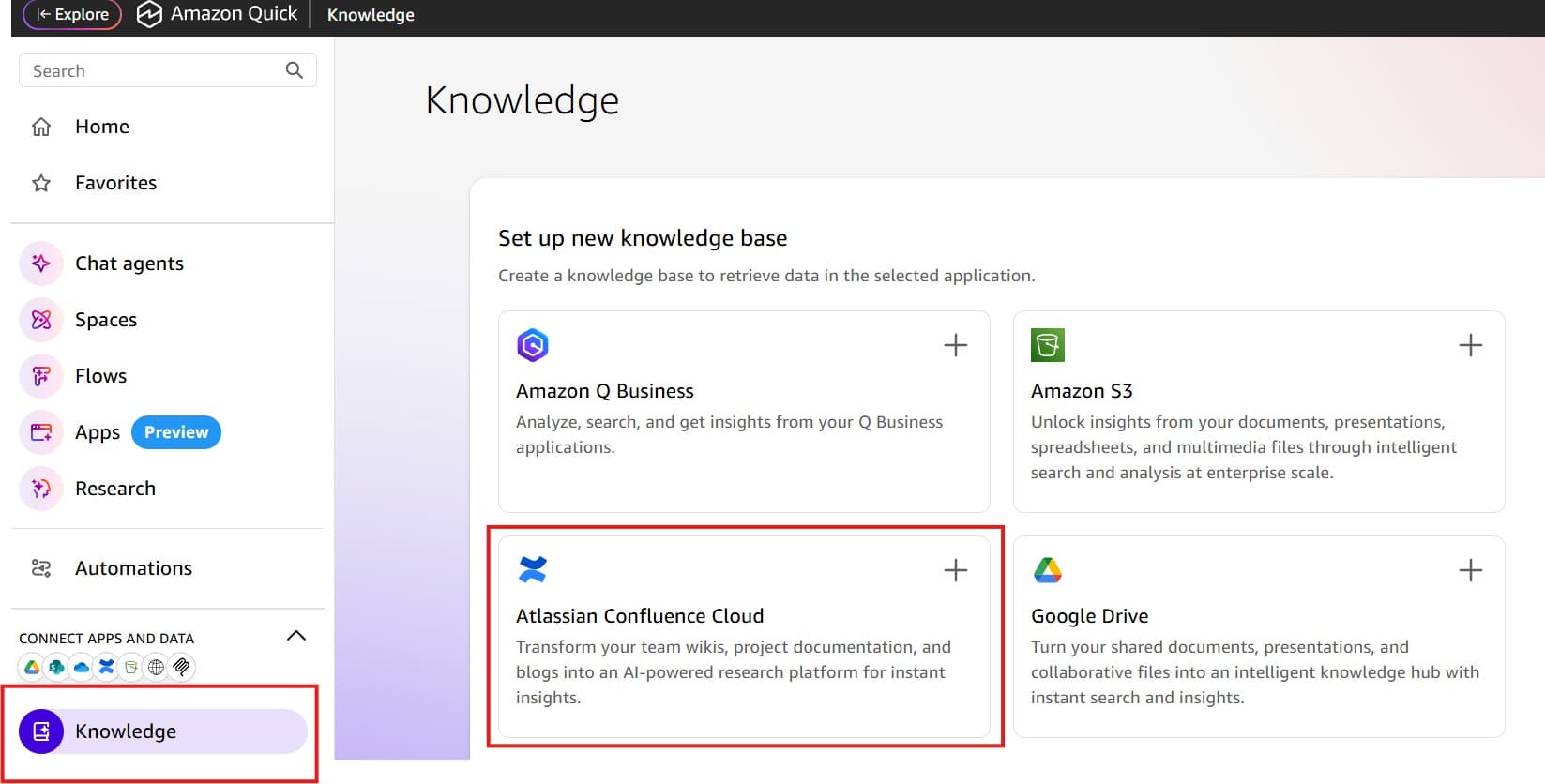
AWS has released integration capabilities between Atlassian Confluence Cloud and Amazon Quick, allowing teams to search and manage documentation through natural language queries without switching between systems. The integration works through two complementary approaches: Actions that execute tasks in real time across connected applications, and Knowledge bases that pre-index Confluence content for instant semantic search. Teams can now query Confluence pages, retrieve documentation, and update content while accessing data from other integrated systems like Amazon S3, JIRA, and Redshift.
Executive Summary
AWS has launched integration between Atlassian Confluence Cloud and Amazon Q, enabling teams to search and manage documentation through natural language queries without switching applications. The integration leverages two approaches: real-time Actions for executing tasks across connected systems and Knowledge bases for semantic search of pre-indexed Confluence content, with support for additional data sources including S3, JIRA, and Redshift.
Key Takeaways
- Amazon Q now integrates directly with Atlassian Confluence Cloud, allowing natural language search across documentation without leaving the AWS ecosystem.
- Two complementary integration methods are available: Actions for real-time task execution and Knowledge bases for instant semantic search of indexed content.
- Teams can query Confluence pages, retrieve documentation, update content, and simultaneously access data from multiple connected systems including S3, JIRA, and Redshift.
- The integration reduces context switching and improves documentation accessibility by consolidating search functionality across multiple platforms.
Why It Matters
This integration addresses a critical pain point for enterprise teams juggling multiple documentation and collaboration tools by enabling unified natural language search across systems. The ability to execute tasks and retrieve information without switching platforms directly improves productivity and reduces friction in knowledge management workflows.
Deep Dive
The AWS-Atlassian integration represents a significant step toward solving the fragmented documentation landscape that many enterprises face. Teams typically maintain critical information across multiple platforms, requiring users to switch between Confluence for documentation, AWS services for infrastructure, and JIRA for project tracking. Amazon Q's integration eliminates this friction through two complementary approaches that serve different use cases.
The Actions capability enables real-time task execution across connected applications, allowing users to not only search for information but also act upon it without context switching. This is particularly valuable for teams performing common documentation tasks like updating pages, creating tickets, or extracting structured data. The Knowledge bases approach complements this by pre-indexing Confluence content for semantic search, delivering instant results for information retrieval queries without the latency of real-time indexing.
The integration's support for multiple data sources including Amazon S3, JIRA, and Redshift extends its utility beyond documentation alone. Teams can now construct complex queries that correlate documentation with project metadata, data warehouse insights, and file storage, creating a more holistic knowledge retrieval system. This multi-source capability transforms Amazon Q from a documentation search tool into a unified intelligence layer that understands context across the organization's technical and operational systems.
For organizations already invested in Atlassian and AWS ecosystems, the integration reduces total cost of ownership by consolidating functionality and training requirements. Rather than licensing separate documentation search and AI query tools, teams can leverage existing investments in Confluence and AWS to achieve unified search capabilities. The natural language interface also lowers adoption barriers, as users need not learn specialized query syntax or develop deep familiarity with search operators.
Expert Perspective
This integration reflects an industry-wide trend toward consolidation of enterprise tools through AI-driven unified interfaces. By enabling natural language search across fragmented systems, AWS acknowledges that the future of enterprise software lies not in replacing tools but in creating intelligent layers that abstract complexity. The combination of real-time Actions and semantic search via Knowledge bases demonstrates sophisticated thinking about how teams actually work, balancing the need for both information discovery and task execution in unified workflows.
What to Do Next
- Audit your organization's documentation platforms and data sources to identify which systems would benefit most from unified Amazon Q search capabilities.
- Evaluate whether Amazon Q's Actions or Knowledge bases approach better aligns with your team's primary use cases, such as documentation lookup versus active content management.
- Plan a pilot integration with a single Confluence space or team to assess search accuracy, latency, and user adoption before enterprise-wide rollout.
- Assess potential integration opportunities with S3, JIRA, and Redshift to create multi-source queries that combine documentation with infrastructure and project data.
Our Briefing
Weekly signal. No noise. Built for founders, operators, and AI-curious professionals.
No spam. Unsubscribe any time.