OpenAI Launches Content Provenance Tools to Verify AI-Generated Media
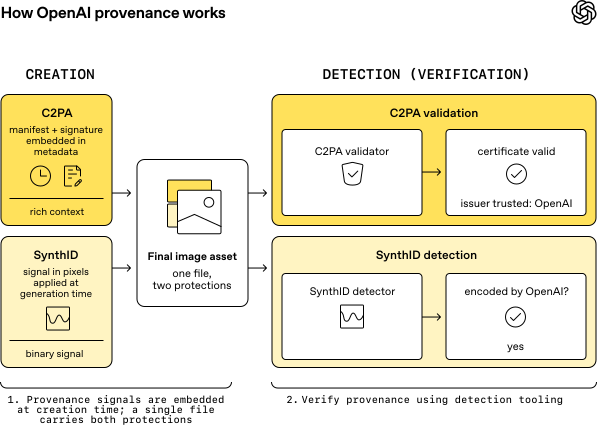
OpenAI has introduced a suite of tools focused on content provenance, including Content Credentials and SynthID, along with a verification tool designed to help users identify and authenticate AI-generated media. The initiative addresses growing concerns about synthetic content authenticity and trustworthiness in an increasingly AI-saturated information environment. These tools aim to create transparency around AI-generated material and establish verifiable markers that distinguish human-created from machine-generated content.
OpenAI has introduced a suite of tools focused on content provenance, including Content Credentials and SynthID, along with a verification tool designed to help users identify and authenticate AI-generated media. The initiative addresses growing concerns about synthetic content authenticity and trustworthiness in an increasingly AI-saturated information environment. These tools aim to create transparency around AI-generated material and establish verifiable markers that distinguish human-created from machine-generated content.
- OpenAI launches Content Credentials and SynthID to track and verify AI-generated content origins
- New verification tool enables users to identify whether media was created by AI systems
- Initiative targets the broader challenge of content authenticity as synthetic media becomes more prevalent
- Tools designed to build trust and transparency in AI-generated material across platforms
Content provenance has become critical as AI-generated text, images, and video become harder to distinguish from authentic material. Without reliable verification mechanisms, misinformation, deepfakes, and synthetic content can spread rapidly and erode public trust. OpenAI's tooling represents an attempt to establish technical standards for transparency that could become foundational infrastructure for the AI ecosystem.
- Content authentication may become an expected feature across platforms, shifting how media is created, distributed, and consumed
- Standardized provenance markers could enable new business models around verified content and creator identity protection
- Verification tools create an arms race dynamic where synthetic content generation and detection capabilities must continuously evolve
- Regulatory and policy frameworks may increasingly reference technical provenance standards as baseline requirements for responsible AI deployment
Our Briefing
Weekly signal. No noise. Built for founders, operators, and AI-curious professionals.
No spam. Unsubscribe any time.