SageMaker and vLLM Enable Real-Time Voice AI Without Custom Infrastructure
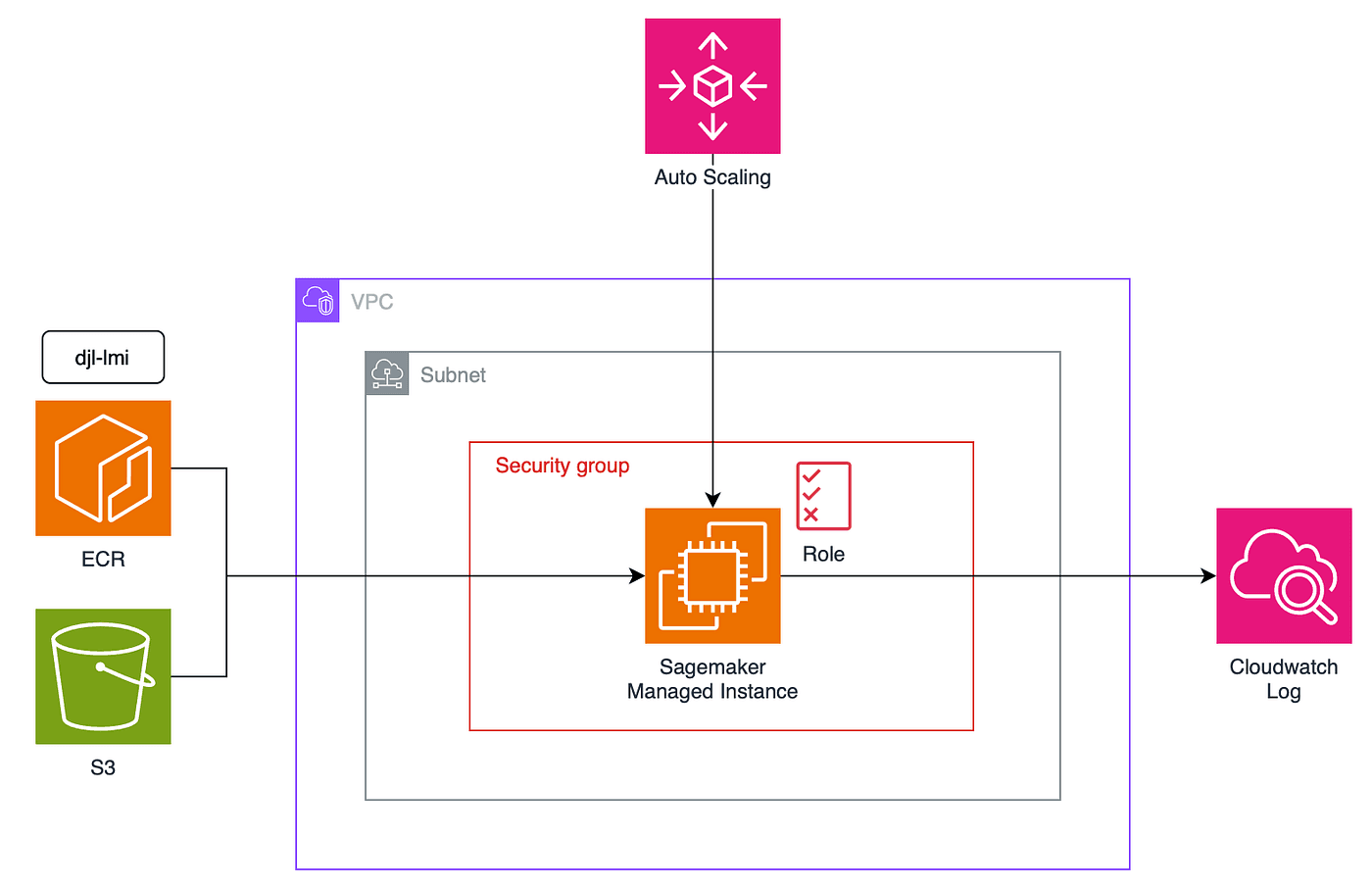
Amazon SageMaker AI now supports bidirectional streaming for real-time inference, enabling continuous two-way data flow between clients and model containers. Combined with vLLM's Realtime API, this allows developers to deploy speech-to-text models like Mistral AI's Voxtral-Mini-4B that process audio incrementally and return transcriptions in real time over WebSocket connections. The integration eliminates traditional request-response latency bottlenecks that break real-time voice applications like voice agents, live captioning, and contact center analytics.
Executive Summary
Amazon SageMaker AI now enables bidirectional streaming for real-time inference, and when combined with vLLM's Realtime API, developers can deploy speech-to-text models that process audio incrementally and return transcriptions in real time over WebSocket connections. This eliminates the latency bottlenecks that traditionally break real-time voice applications, making it feasible to build voice agents, live captioning systems, and contact center analytics without custom infrastructure.
Key Takeaways
- SageMaker AI's bidirectional streaming support enables continuous two-way data flow between clients and model containers, replacing traditional request-response patterns that introduce unacceptable latency for voice applications.
- vLLM's Realtime API integrated with SageMaker allows models like Mistral AI's Voxtral-Mini-4B to process audio streams incrementally, returning partial and final transcriptions as data arrives rather than waiting for complete input.
- WebSocket-based connections eliminate round-trip latency that historically required custom infrastructure, making real-time voice AI accessible to developers without specialized deployment knowledge.
- The solution enables three key use cases: voice agents that respond naturally to interruptions, live captioning systems that keep pace with speaker tempo, and contact center analytics that process conversations in real time.
- This approach reduces time-to-market for voice AI applications by removing the need to build custom streaming infrastructure or manage dedicated inference servers.
Why It Matters
Real-time voice applications require sub-100ms latency to feel natural to users, and traditional cloud inference patterns cannot meet this requirement due to request-response overhead. By enabling true streaming inference with managed infrastructure, SageMaker and vLLM democratize voice AI development and unlock new product categories that were previously only viable for organizations with significant engineering resources.
Deep Dive
Real-time voice AI has remained constrained to organizations with deep machine learning infrastructure expertise because standard cloud inference patterns introduce unacceptable latency. Traditional request-response APIs require the client to accumulate audio data, send it as a complete request, wait for processing, and receive a response, introducing multiple round-trip delays. For voice applications, this creates a perceptible lag that makes voice agents sound unresponsive, live captioning miss key moments, and real-time analytics systems fall behind the conversation.
The integration of SageMaker's bidirectional streaming with vLLM's Realtime API fundamentally changes this constraint. Instead of buffering audio until a logical speech boundary occurs, the system can process audio frames as they arrive from the client, returning intermediate results (such as partial transcriptions) while continuing to process subsequent frames. This streaming approach mirrors how humans process speech naturally, allowing models to begin transcribing immediately rather than waiting for silence or a fixed timeout.
Voxtral-Mini-4B serves as an exemplar model for this approach, as speech-to-text models are particularly well-suited to incremental processing. Unlike models that require complete input sequences to generate accurate outputs, modern streaming speech-to-text architectures produce increasingly refined transcriptions as more audio context becomes available. The WebSocket transport layer ensures that network latency remains minimal and bidirectional communication is maintained throughout the conversation.
From an infrastructure perspective, this eliminates the need for custom engineering. Previously, teams building voice agents would need to implement custom streaming servers, manage WebSocket connections, implement their own buffering logic, and handle error recovery and reconnection scenarios. By leveraging SageMaker's managed infrastructure, developers can focus on model selection, prompt engineering, and application logic rather than systems engineering.
The business implications are substantial. Contact centers can now monitor call quality and sentiment in real time without post-processing delays, enabling immediate escalation or intervention. Accessibility applications can provide live captioning at natural conversation pace. Voice assistant platforms can deliver the responsive, interruption-aware interaction patterns that users expect from consumer voice products, all without building proprietary infrastructure.
Expert Perspective
This advancement represents a meaningful inflection point in making generative AI capabilities accessible to mainstream enterprise development teams. While streaming inference has been technically possible for specialized use cases, the combination of managed cloud infrastructure with modern language models addresses the last major barrier: making real-time voice AI practical without requiring deep systems expertise. Organizations that have hesitated to invest in voice applications due to infrastructure complexity now have a clear path to deployment, which should accelerate adoption across contact centers, healthcare, accessibility, and customer service applications.
What to Do Next
- Evaluate current voice application requirements against latency constraints, and prioritize projects where sub-100ms response times would unlock new use cases or improve user experience measurably.
- Review vLLM's Realtime API documentation and SageMaker bidirectional streaming configuration to assess compatibility with your existing deployment infrastructure and model selection strategy.
- Prototype a proof-of-concept using Voxtral-Mini-4B or a similar speech-to-text model on SageMaker to establish baseline latency, cost, and quality metrics specific to your use case before full implementation.
- Investigate whether your contact center, accessibility, or voice agent applications would benefit from real-time analytics and transcription, and plan a phased rollout strategy for teams that can deliver immediate business value.
Our Briefing
Weekly signal. No noise. Built for founders, operators, and AI-curious professionals.
No spam. Unsubscribe any time.