OpenAI Claims Reasoning Model Solved 80-Year Math Problem
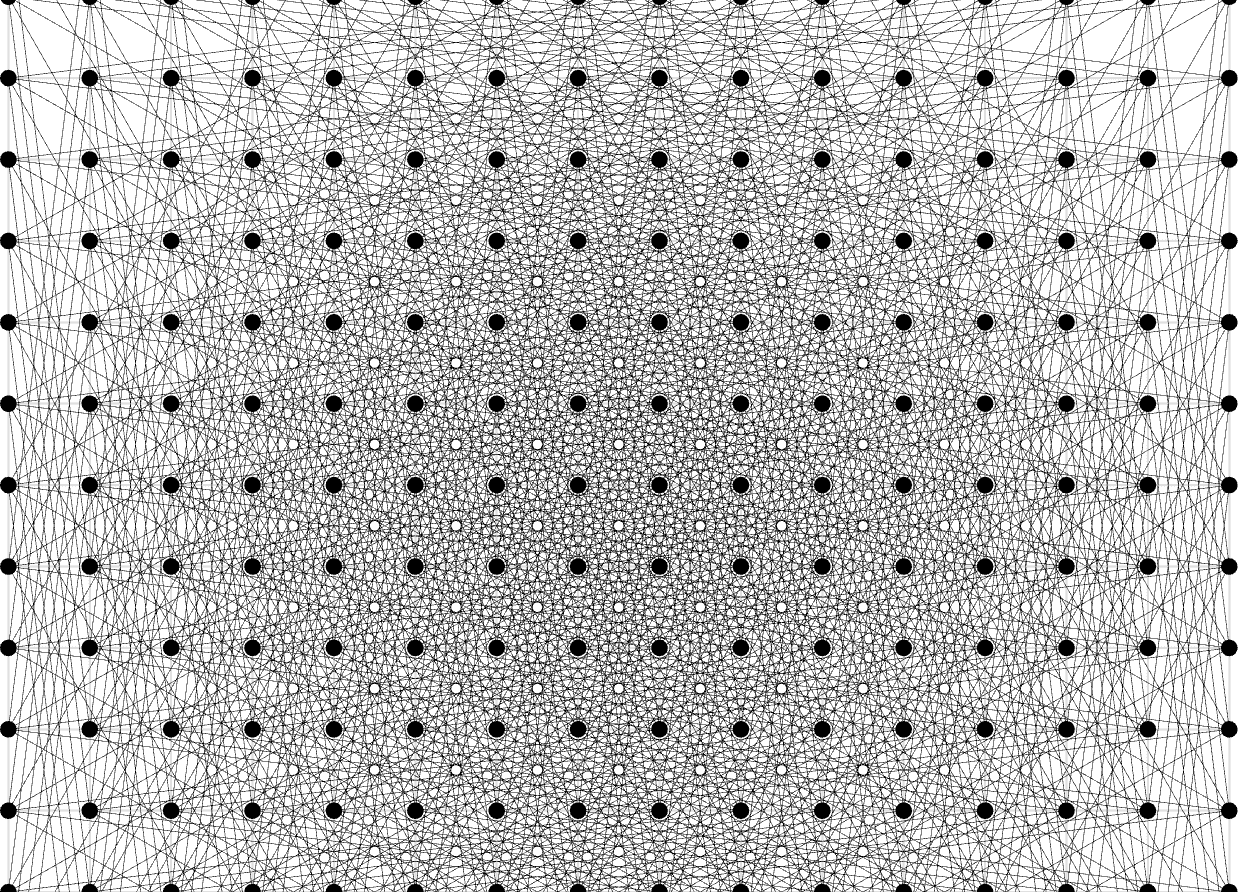
OpenAI claims its reasoning model has disproven a geometry conjecture that has remained unsolved since 1946. The claim carries weight because mathematicians who previously exposed OpenAI's false mathematical claims are now backing up this result. This marks a potential shift in AI's capability to tackle long-standing open problems in pure mathematics, though verification by the broader mathematical community remains pending.
Executive Summary
OpenAI claims its reasoning model has disproven a geometry conjecture unsolved since 1946, with credibility bolstered by mathematicians who previously exposed the company's false mathematical claims. This development represents a potential breakthrough in AI's ability to solve long-standing open problems in pure mathematics, though the broader mathematical community has not yet fully verified the result.
Key Takeaways
- OpenAI's reasoning model claims to have solved the Erdos-Klarner problem, a geometry conjecture open for 80 years since 1946.
- The claim carries significantly more weight because mathematicians who previously debunked OpenAI's false mathematical claims are now endorsing this result.
- Verification by the broader mathematical community remains pending and is essential for confirming the breakthrough.
- This development signals a potential inflection point in AI capabilities for tackling pure mathematics research problems that have resisted human solution efforts.
Why It Matters
If verified, this achievement would demonstrate that AI reasoning models can tackle genuinely difficult unsolved problems in pure mathematics, potentially reshaping how academic research is conducted and validating massive investments in AI reasoning capabilities. The credibility validation from skeptical mathematicians also rebuilds trust in OpenAI's mathematical claims after previous controversies.
Deep Dive
OpenAI's announcement that its reasoning model has disproven a geometry conjecture from 1946 represents a significant claim in the intersection of artificial intelligence and pure mathematics. The Erdos-Klarner problem, which has remained unsolved for eight decades, represents the type of intractable open problem that defines the frontier of mathematical research. What distinguishes this claim from previous OpenAI announcements is the endorsement from mathematicians who have previously served as skeptical auditors of the company's mathematical capabilities. Their willingness to back the result suggests either a genuine methodological advancement or at minimum, a result that withstands scrutiny from domain experts predisposed to skepticism. The practical implications extend beyond academic achievement, as breakthroughs in mathematical reasoning could accelerate solution discovery in physics, cryptography, optimization, and engineering disciplines that depend on mathematical foundations. However, the distinction between solving an open conjecture and merely proposing a solution that awaits peer review validation remains critical. The mathematical community operates through established verification mechanisms including journal publication, peer review, and independent verification by other mathematicians. Until these formal channels confirm the result, the claim remains significant but unverified. This situation reflects a broader pattern where AI capabilities are advancing faster than the institutional mechanisms designed to evaluate and validate their outputs.
Expert Perspective
From an AI capability standpoint, this development, if verified, would represent the transition from AI systems excelling at narrow pattern recognition tasks to systems capable of original mathematical reasoning and proof generation. Skeptics note that previous OpenAI claims about mathematical capabilities required substantial downward revision, making community verification essential before declaring this a genuine breakthrough. Optimists observe that the involvement of credible skeptical mathematicians in endorsing the claim suggests the company has learned from previous missteps and implemented more rigorous internal validation. The broader implication is that we may be entering a phase where frontier AI systems can contribute meaningfully to pure research in ways that were previously considered implausible.
What to Do Next
- Monitor peer review channels and mathematical journals for formal publication of OpenAI's proof to distinguish between a promising result and a validated breakthrough.
- Assess how this development impacts your organization's AI research strategy, particularly if you operate in sectors dependent on mathematical discovery and optimization.
- Evaluate the implications for academic partnerships and research validation processes, as AI-generated proofs may require new institutional approaches to verification and peer review.
- Track whether similar reasoning models from competitors like Anthropic, Google DeepMind, or others announce comparable mathematical achievements, which would indicate whether this capability is broadly emergent across the AI industry.
Related Video
Our Briefing
Weekly signal. No noise. Built for founders, operators, and AI-curious professionals.
No spam. Unsubscribe any time.