VFF - The signal in the noise
News

Datadog Veterans Launch AI Coding Startup Betting Against Vendor Lock-in

Read original
Share
Datadog Veterans Launch AI Coding Startup Betting Against Vendor Lock-in

Niteshift, an AI coding agent startup founded by Datadog veterans, has raised $7 million in seed funding from prominent angel investors. The company is positioning itself against vendor lock-in by betting that enterprises will prefer tools that give them control over AI model selection rather than being locked into proprietary solutions from major AI providers.

  • Niteshift raised $7 million seed round from notable angels
  • Founded by veterans from Datadog, a monitoring and observability platform
  • Focuses on AI coding agents with emphasis on avoiding vendor lock-in
  • Targets enterprises seeking control over model selection and deployment

The startup's core thesis reflects growing enterprise concern about dependency on large AI model providers. As AI coding tools become critical infrastructure, companies increasingly want flexibility to switch between models and avoid being locked into single vendors, making this a significant market opportunity.

For enterprises, Niteshift's approach addresses a real pain point: the risk of becoming dependent on a single AI provider's pricing, availability, and roadmap decisions. This positions the company to capture demand from organizations that view AI coding as strategic infrastructure requiring vendor independence.

  • Enterprise demand for AI tool portability and multi-model support is strong enough to fund startups
  • Vendor lock-in concerns are shaping product strategy and investment decisions in the AI coding space
  • Datadog's talent pool continues to seed new ventures in adjacent infrastructure and developer tooling markets

Monitor whether Niteshift gains traction with enterprise customers and how major AI providers respond to lock-in concerns. Watch for similar startups emphasizing model flexibility and whether this becomes a standard feature expectation in AI coding tools.

Share

Our Briefing

Weekly signal. No noise. Built for founders, operators, and AI-curious professionals.

No spam. Unsubscribe any time.
Related stories

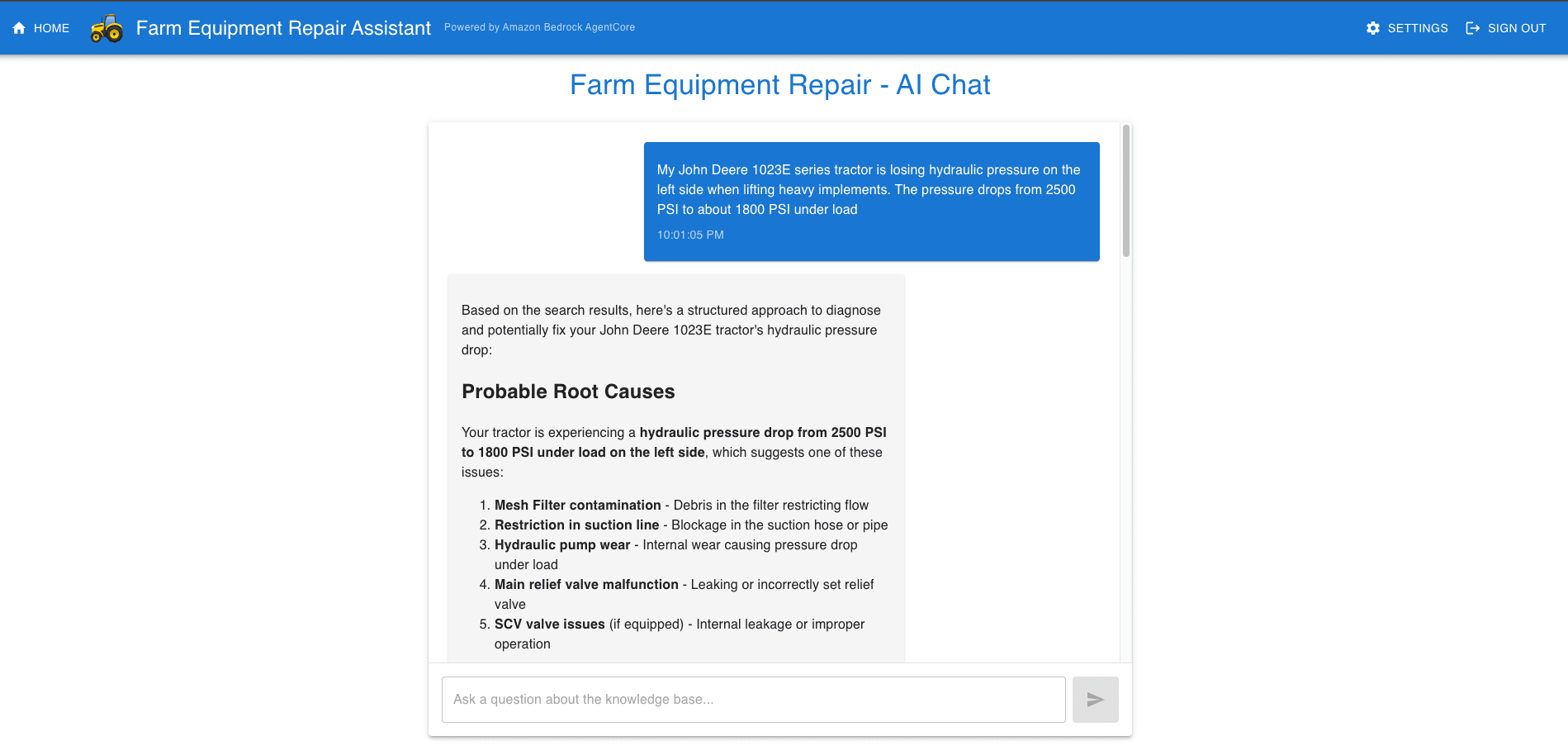
AWS Bedrock AgentCore Enables AI Equipment Repair Assistant

AWS Bedrock AgentCore Enables AI Equipment Repair Assistant

AWS published a technical guide on building an AI-powered equipment repair assistant using Amazon Bedrock AgentCore, designed to help farmers and field technicians diagnose heavy machinery problems and access repair procedures through natural language. The solution combines AgentCore Runtime, Amazon Nova 2 Lite, Bedrock Knowledge Base for retrieval-augmented generation, and conversation memory to reduce diagnostic downtime and site visits. The architecture integrates Amazon Cognito for authentication, AWS Amplify for frontend hosting, and indexed manufacturer documentation for semantic search.

by Puneeth Komaragiri· AWS Machine Learning Blog
Jedify lands $24M to contextualize AI agents for enterprise

Jedify lands $24M to contextualize AI agents for enterprise

Jedify closed a $24 million Series A funding round led by Norwest Venture Partners, with participation from S Capital VC, Cerca Partners, Oceans Ventures, and strategic investor Snowflake Ventures. The company provides context and business knowledge to AI agents, enabling them to operate more effectively within enterprise environments. The funding reflects growing investor interest in infrastructure that bridges AI models and real-world business operations.

by Ram Iyer· TechCrunch AI
Apple's Flash-Based Model Architecture Breaks On-Device Memory Ceiling
TrendingNews

Apple's Flash-Based Model Architecture Breaks On-Device Memory Ceiling

Apple announced AFM 3, a new foundation model family developed with Google that includes a 20-billion-parameter on-device model storing weights in NAND flash rather than DRAM. The architecture routes expert selection once per prompt instead of per token, allowing larger models to run locally while staying within consumer device memory constraints. This addresses a fundamental limitation that has kept on-device AI models significantly smaller than cloud alternatives.

· VentureBeat AI
Cohere open-sources coding agent that runs on single H100

Cohere open-sources coding agent that runs on single H100

Cohere released North Mini Code, a 30 billion parameter open-source coding agent that runs on a single H100 GPU, offering engineering teams an alternative to proprietary models like Claude Fable 5. The model is purpose-built for agentic software engineering tasks including code review, architecture mapping, and terminal work, but generates roughly three times more output tokens than comparable models in testing, creating a verbosity cost in high-volume production scenarios.

· VentureBeat AI