VFF - The signal in the noise
News

AI-Generated Story Slips Into Prestigious Literary Prize

Gaby Del ValleRead original
Share
AI-Generated Story Slips Into Prestigious Literary Prize

An AI-generated short story appears to have won selection in Granta magazine's Commonwealth Short Story Prize, a prestigious annual award that has published regional winners since 2012. The story, attributed to Jamir Nazir and titled 'The Serpent in the Grove,' exhibits characteristic patterns of large language model output including mixed metaphors, anaphora, and repetitive list structures. The discovery raises questions about how literary institutions vet submissions and whether current evaluation methods can reliably detect AI-generated content.

  • An apparently AI-written story was selected for Granta's Commonwealth Short Story Prize, a major British literary award
  • The story exhibits typical LLM hallmarks: mixed metaphors, anaphora, and lists of threes
  • Literary institutions lack clear submission vetting processes to detect AI-generated work
  • The incident exposes gaps in how prestigious awards validate authorship and originality

This incident demonstrates that AI-generated content can pass through the editorial gatekeeping of prestigious literary institutions, challenging assumptions about human curation and expertise. It signals a broader credibility problem for literary awards and publishing if AI submissions cannot be reliably detected or excluded. The literary world now faces the same authentication challenges that other creative industries are grappling with.

Publishers and literary organizations face reputational and operational risks if they cannot verify authorship. Award programs may need to implement new submission protocols, authentication requirements, or detection tools, creating costs and operational complexity. This also raises questions about liability and the commercial value of literary prizes if winners cannot be verified as human-authored.

  • Literary awards and publishing institutions need clearer policies on AI-generated submissions and detection methods
  • Current editorial expertise and human review may be insufficient to identify sophisticated AI-generated prose
  • The publishing industry may face similar authentication challenges that have emerged in academic publishing and visual art

Monitor whether Granta and other literary institutions implement new submission guidelines, authentication requirements, or AI detection protocols. Watch for industry-wide responses from major publishers and award organizations on how they will handle AI-generated submissions. Track whether detection tools emerge specifically designed for identifying AI-written prose in literary contexts.

Share

Our Briefing

Weekly signal. No noise. Built for founders, operators, and AI-curious professionals.

No spam. Unsubscribe any time.

Related stories

Anthropic Warns on Recursive Self-Improvement Even as Industry Races Ahead

Anthropic Warns on Recursive Self-Improvement Even as Industry Races Ahead

Anthropic announced that Claude now writes 80% of its code, highlighting progress toward recursive self-improvement, where AI systems create the next generation without human involvement. The company simultaneously warned that this capability poses control risks, as unintended model behaviors could compound across generations and become harder to understand. The announcement reflects broader industry momentum, with OpenAI, Google DeepMind, and well-funded startups like Recursive Superintelligence and Inherent all pursuing similar capabilities.

by Rocket Drew2 days ago· The Information
Illinois Passes AI Safety Audit and Whistleblower Bill

Illinois Passes AI Safety Audit and Whistleblower Bill

The Illinois House of Representatives passed legislation requiring major AI companies to submit model safety plans for third-party audits and establishing whistleblower protections for their employees. The bill awaits Governor JB Pritzker's signature. The measure represents one of the first state-level regulatory efforts targeting AI safety practices directly.

by Leo Schwartz12 days ago· The Information
AI Therapy Startup Claims Major Safety Advantage Over Consumer Bots

AI Therapy Startup Claims Major Safety Advantage Over Consumer Bots

The Path, a startup founded by veterans from Tony Robbins' organization and Calm, claims its AI therapy model scored 95 on the Vera-MH mental health safety benchmark, significantly outperforming consumer AI bots which top out at 65. The company is positioning itself as a safer alternative for AI-driven mental health support. The benchmark score suggests meaningful progress in building AI systems that can handle sensitive mental health conversations with reduced risk of harmful outputs.

by Julie Bort20 days ago· TechCrunch AI
AWS Demonstrates AI Recruitment Assistant Using Bedrock

AWS Demonstrates AI Recruitment Assistant Using Bedrock

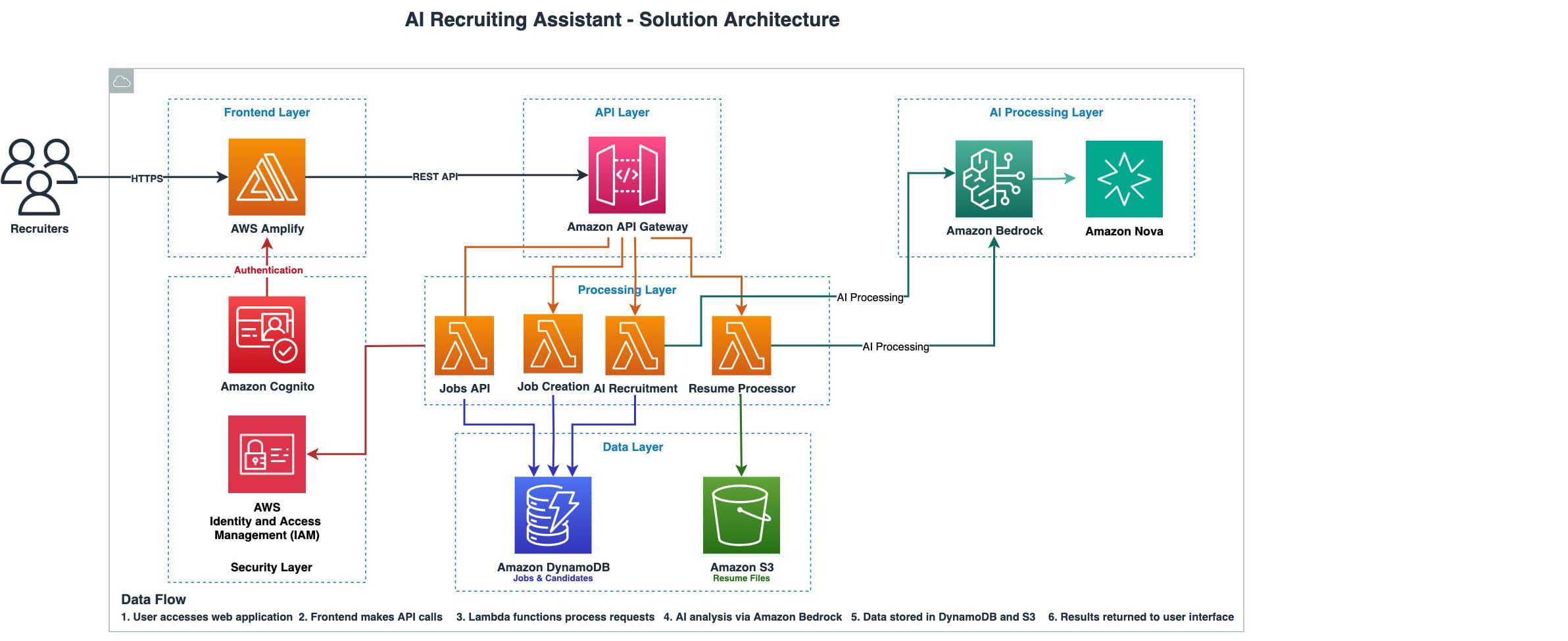
AWS published a reference architecture for building an AI-powered recruitment assistant using Amazon Bedrock that automates resume parsing, candidate scoring, skill assessment, and interview question generation. The solution addresses a documented problem where recruiters spend an average of 17.7 hours per vacancy on administrative work, with 45% of talent acquisition leaders spending more than half their time on automatable tasks. The system incorporates Amazon Bedrock Guardrails for PII anonymization, bias filtering, and prompt attack detection across a serverless architecture combining Lambda, API Gateway, DynamoDB, and S3.

by Puneeth Komaragiri20 days ago· AWS Machine Learning Blog